



David Brown
Uses experience in plaintiff and defense work to negotiate with insurance companies and pursue full claim value for injured clients.
View ProfileFree Consultation
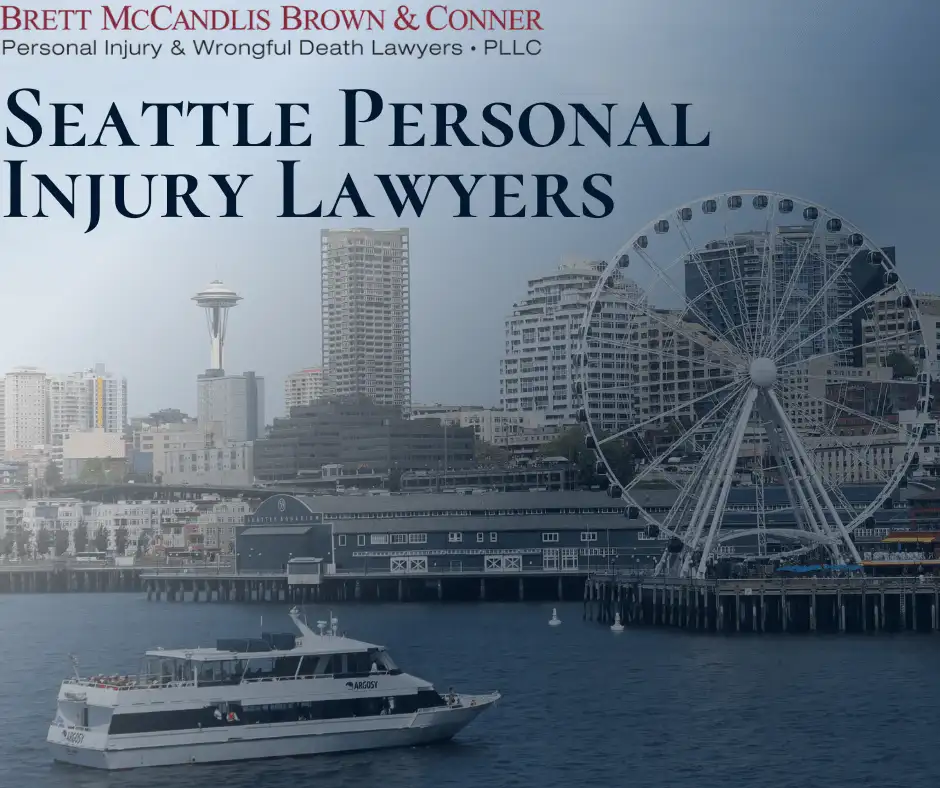
Seattle is famous for its stunning skyline and views of the Cascade and Olympic mountain ranges, its friendly people, its variety of outdoor sporting opportunities, its rainy weather, and its traffic. It is a unique city with a unique set of challenges for people trying to get around town.
When an accident or injury happens, it is best to work with an experienced Seattle personal injury lawyer who knows Seattle’s roads, how the road construction projects can contribute to an accident, the regional insurance companies and how they handle claims, and, most of all, knows how to obtain a full settlement for their clients.
Because we have been so heavily involved in our Seattle community over the years, our knowledge of the city is vast, and our connections here are even more profound.
We know many industry professionals (including medical professionals) who can assist with your case. Often, we know the other attorneys working on the claim, and sometimes even the claims adjusters working for the insurance companies. And we want to put all this knowledge to use to benefit our clients as they pursue justice for their injury or wrongful death claim in Seattle.
Our trusted Seattle personal injury lawyers have spent 40 years helping injured accident victims recover financially so they can move forward with their lives.
We work with clients who have been seriously injured and are seeking experienced injury lawyers capable of handling an accident claim to obtain a full settlement. We aren’t afraid to take your case to a jury if we can’t get a satisfactory settlement offer. Find out how an experienced Seattle personal injury attorney at Brett McCandlis Brown & Conner PLLC can help you move forward with your life after an accident or injury.
Talk to our legal team immediately by calling us directly. Our injury lawyers will get back to you promptly.
At Brett McCandlis Brown & Conner PLLC, our main practice areas encompass a comprehensive range of personal injury claims. We specialize in handling cases involving auto accidents, wrongful death, traumatic brain injuries, DUI incidents, and more. Our experienced team is adept at navigating the complexities of each case, ensuring justice and fair compensation for our clients.
Our skilled Seattle personal injury attorneys have vast experience handling personal injury and wrongful death cases that begin on the crowded roads and freeways of the city. We have found that the intense traffic, seemingly constant road construction projects, and lack of mass transit options that most cities of similar size offer lead to an extraordinarily high incidence of accidents.
We handle just about any type of personal injury claim, including the following types of claims:
In addition to these established practice areas, our Seattle legal team also assists clients with several emerging categories of personal injury claims that continue to grow in the region due to changing transportation habits and new technologies.
When a Seattle injury claim involves medical bills, missed work, insurance pressure, pain and suffering, or long-term recovery, having the right legal team involved early can help protect the value of the case.
Uses experience in plaintiff and defense work to negotiate with insurance companies and pursue full claim value for injured clients.
View Profile
Brings extensive courtroom experience and focuses on securing strong settlements and verdicts for Seattle injury clients.
View Profile
Works with personal injury and wrongful death clients to pursue the financial support they need after serious harm.
View ProfileEvery case depends on its own facts, injuries, evidence, insurance coverage, and applicable law. These results show the firm’s experience handling serious injury and wrongful death claims.
Record verdict against Washington State Patrol after a drunk driver caused a devastating crash.
Recovery for a woman who suffered a broken leg in a fall at a race track.
Recovery for a pedestrian who suffered multiple fractures after being injured.
Recovery for the wrongful death of a teenage pedestrian struck by a tow truck.
While not every case will yield compensation in the millions, we are often able to help our clients pursue a claim to the fullest extent of the law while they recover from their injuries, pain, and suffering as they try to deal with the difficult journey ahead of them. Because we are so frequently able to assist our clients in their recovery in the midst of terrible, sometimes even tragic, situations, we take immense pride in our firm’s results and our Seattle community.

Perhaps you can’t work or drive and have mounting medical bills. Perhaps you were injured by an uninsured motorist and need your insurance company to pay your medical bills. Perhaps an insurance company is pressuring you to settle your claim immediately.
All injured people seeking a lawyer need to ask themselves these questions:
For less serious injuries and smaller claims, it may be possible to effectively handle your insurance claim yourself. The problem is that most people don’t know how much their claim is worth.
How do you evaluate the cost of future medical treatment?
What is the monetary value of pain, suffering, and loss of enjoyment of life?
Furthermore, claims that involve accidents or injuries (or both) can become incredibly nuanced. More often than not, victims are not aware of legislation that may entitle them to additional damages. Or, if they are aware, they may not be sure when such entitlement is applicable and how these damages should be pursued.
Though investing in an attorney may not seem necessary at the beginning of a claim, working with a legal team throughout your case is often the more financially prudent choice to make.
In our view, the most important thing Seattle personal injury attorneys can offer clients is access to accurate information about their rights and choices regarding their claims.
While we pride ourselves on our legal knowledge, our ability to negotiate a full settlement with insurance companies, and our willingness to take a case to court if the negotiation results are unsatisfactory, our trusted personal injury attorneys in Seattle think the key to a good outcome is enabling our clients to make the best decisions based upon their unique needs and interests.
Some people may walk away from a car accident with minor injuries, while a slip and fall might result in permanent damage. Some of the most common personal injuries in Seattle include:
These aren’t the only injuries we can represent you for, just some of the more common ones we see. If someone else’s actions harmed you, you have the right to pursue compensation from the responsible parties.
Seattle injury claims can depend on the neighborhood, traffic pattern, business cameras, medical records, police reports, witnesses, road construction, transit evidence, and where treatment happened.
If the injury happened in Downtown, Belltown, Pioneer Square, or South Lake Union, nearby businesses, parking garages, office buildings, hotels, rideshare zones, and delivery routes may all hold important evidence.
A strong claim connects the injury location, responsible party, treatment timeline, official report, insurance coverage, and damages proof.
Save the intersection, store, apartment, office, hospital, trail, parking lot, sidewalk, roadway, transit stop, or neighborhood landmark.
Look for dashcams, business cameras, apartment cameras, parking garage footage, transit footage, building cameras, and doorbell cameras.
Keep ER records, urgent care notes, imaging, prescriptions, referrals, physical therapy records, bills, and follow-up instructions.
Save Seattle Police, WSP, King County, incident, property, animal control, transit, or business report details.
Treatment records, crash reports, incident records, transit documentation, photos, and consistent medical follow-up can help prove what happened and how the injury affected your life.
Before you receive any money, you must prove who is responsible. To successfully prove negligence, you must show evidence of these four elements:
Failure to meet the burden of proof for negligence means you will not recover any compensation for your personal injury claim.
It’s important to note that Washington is a pure comparative negligence state. That means you can be partially at fault for the accident and still collect some of your damages. Your percentage of fault will reduce the amount of compensation you receive.
Yes, all personal injury claims are subject to legal deadlines, such as the statute of limitations. You typically have three years from the date of the accident to file a lawsuit.
Failure to file within the deadline means the court will likely dismiss your case. You will not be allowed to proceed, no matter how strong your claim is. The deadline can vary for different types of personal injury claims.
In Washington, personal injury claims are subject to a statute of limitations, typically granting victims three years from the accident date to file a lawsuit. Missing this deadline can lead to dismissal of the case, regardless of its merits. It’s crucial to act promptly and consult a lawyer to ensure timely legal action.
Other circumstances can reduce or extend the amount of time you have to file. Don’t risk losing the right to file a claim. Hire a skilled Seattle personal injury lawyer to ensure all legal deadlines are met.
Compensatory damages in a personal injury claim compensate you for your losses, both tangible and intangible. There are two main categories of damages—economic and noneconomic.
Economic damages are your tangible financial losses. These are usually easier to calculate than noneconomic damages because evidence such as doctor bills or invoices will show how much your costs are. Examples of economic damages include medical expenses, lost wages, and property damage.
Noneconomic damages are your intangible and more subjective losses. They can be more challenging to calculate, but they can also make up the largest portion of your potential settlement. Examples include pain and suffering, mental anguish, loss of consortium, and more. When you meet with our team, we will explain what damages apply in your case and how much compensation you may be eligible to receive.

Personal injury claims typically proceed in accordance with the following sequence. The vast majority of cases do not proceed through all seven of the phases listed below, however, because they are usually settled earlier than that.
The claims process for personal injury cases typically involves several phases, starting with investigation and evidence gathering. This is followed by issuing settlement demands, potentially filing a lawsuit, and engaging in the discovery process. Negotiations often intensify post-discovery, leading to a trial if a settlement isn’t reached. In rare cases, an appeal may follow.
The first phase of a personal injury case involves investigating to determine the facts and gathering admissible evidence to support them. It might involve, for example:
After the investigation and evidence-gathering phase has been completed, it is usually time to issue a settlement demand to the other side. In fact, the settlement demand might be the other side’s first indication that you are filing a personal injury claim.
Ideally, your claim will be resolved at this stage. If the case is complex or involves high compensation claims, however, you can expect the other side to be too stubborn to settle at this stage.
Filing a lawsuit is a common tactic used by personal injury victims. Its main purpose at this stage is to:
At this stage, both sides usually remain hopeful that a trial can be avoided.
The discovery process takes place only after you have already filed a lawsuit. This process allows you to gather evidence in several different ways, including:
If the defendant refuses your demands, you can petition the court to order the defendant to comply with the pain of contempt of court charges if he fails to obey the order. Of course, the defendant can also gather evidence from you in the same manner.
Once the discovery process is complete, negotiations typically intensify because most of the evidence is known to both sides.
A trial typically takes place several weeks after the lawsuit is filed. Although, in some cases, it can take months. Most trials are completed within a day. Although the parties can agree to a bench trial (decided by the judge), the defendant has the right to demand a jury trial.
On rare occasions, the losing side at trial appeals an adverse decision. The appeals court usually (but not always) confirms the trial court’s decision. Find knowledgeable Seattle personal injury attorneys who can help you through the process.
After an accident, most people expect the insurance company to handle their claim fairly. Unfortunately, insurers are corporations with profit targets, and every dollar they pay out affects their bottom line. Understanding how they operate can help you avoid costly mistakes and protect your right to full compensation.
Some common tactics we see from insurers include:
Insurance adjusters are not on your side, no matter how friendly or helpful they may appear. Working with an experienced Seattle personal injury attorney levels the playing field, counters these tactics, and helps secure the full compensation you deserve.

Yes, you can, although the claims will be different from each other. Suppose, for example, you were injured in an auto accident caused by a negligent driver, and suppose the emergency room doctor was negligent in his treatment of you as well – in other words, you were having a very bad day. You could then file an ordinary personal injury claim against the driver, and a malpractice claim against the doctor.
Not necessarily. Under Washington’s comparative fault law, your damages will be reduced by your percentage of fault. If you were 30 percent at fault, for example, you will lose 30 percent of your damages, and you will have to pay the other driver 30 percent of his damages, while the other driver will lose 70 percent of his damages and must pay 70 percent of your damages. Setting these amounts off each other tells you how much you won or lost.
Many people underestimate the severity of their injuries in the first few days. Pain often worsens over time, and symptoms from concussions, nerve damage, and soft-tissue injuries can take days or weeks to appear. A lawyer becomes especially important if you miss work, face ongoing medical treatment, experience insurance delays, or feel pressured to settle before you understand the full extent of your injuries.
Yes. Insurance carriers routinely review medical records, social media activity, and treatment gaps to argue that an injury is not serious. Adjusters look for any content they can use to downplay your condition. We advise clients on protecting their claims and avoiding common mistakes insurers exploit.
You still have options. Many Seattle providers accept attorney liens, which means they wait for payment until your claim is resolved. We help clients find appropriate providers and manage their medical bills so treatment doesn’t stop because of financial concerns.
You can begin a claim immediately. In fact, early action helps preserve evidence and prevents insurers from disputing the timeline of your injury. We communicate directly with insurance adjusters to prevent them from pressuring you into early statements or low-value settlements.
Several factors affect your timeline, including injury severity, how long your medical treatment lasts, and whether the other party disputes liability. Most claims resolve after you reach maximum medical improvement, ensuring you don’t settle before understanding the long-term impact of your injuries. Straightforward cases may settle in months; complex cases or those requiring litigation take longer.
Yes. Washington law allows injured victims to claim lost wages, reduced hours, missed opportunities, and, when applicable, loss of future earning capacity. Documentation from your employer and medical provider can significantly strengthen this part of your claim.
If an injury limits your physical abilities or your capacity to perform essential job duties, you may be eligible for compensation reflecting diminished earning capacity. This may include future wage losses or impacts on your long-term career path. We work with vocational experts when needed.
Delays are a common tactic used to pressure injured victims into accepting low settlements. If an insurer is not responding promptly, not approving medical treatment, or failing to investigate, we intervene immediately to force progress and hold the insurer accountable.
Most early settlement offers are far below the true value of a claim. A fair settlement accounts for medical bills, future treatment, lost wages, pain and suffering, long-term limitations, and other damages. We evaluate offers based on every category of loss, not just your immediate bills.
Not unless the defendant doesn’t realize that the deadline has already passed. Your ability to file a lawsuit is usually your only leverage in settlement negotiations.
Unless you have significant legal experience, you risk jeopardizing your case in multiple ways without an experienced attorney representing you. You might miss important deadlines, fail to preserve evidence, or neglect to include all your damages in a settlement demand. The defendant’s insurance company might trick you into admitting fault during a recorded statement that can cost you compensation you’re entitled to receive. Many personal injury cases involve complex legal issues and multiple defendants. You need an experienced personal injury lawyer to help you identify all avenues of recovery.
If you suffered an injury in a Seattle accident, the following local providers and agencies offer medical care, trauma recovery support, transportation assistance, and documentation services to strengthen your claim. Our team can help you obtain medical records, crash reports, or refer you to appropriate specialists if needed.
Accurate medical documentation, timely reporting, and consistent treatment help strengthen your personal injury case. These Seattle-area providers and agencies offer services that support:
Our team can help you obtain records, identify the most suitable providers for your injuries, and coordinate the necessary information for your claim.
It is in your best interest to speak with a highly experienced Seattle personal injury lawyer who knows what your claim is worth, how to manage insurance adjusters, and has the experience to obtain a full settlement for you.
Many studies show that an injury attorney is typically able to obtain significantly more in settlement than an injured person can alone. Typically, an attorney-negotiated settlement will not only cover the cost of lawyer fees but will also secure a larger settlement sum for clients.
After a serious accident or wrongful death has affected your family, you should ask yourself the following: What’s stopping you from contacting an experienced Seattle personal injury attorney? We know your situation is probably full of questions and the jarring reality of many sudden unknowns.
This is why we believe our legal services are especially important for you and your family. Our Seattle injury attorney can offer two things that you may deeply miss at this time: peace of mind and the confidence of knowing your case is being handled professionally by legal experts.

Reach out to Paula, Dave, Matt, and Dean (Retired) if you are struggling with the aftermath of an accident and need some support and advice. A knowledgeable Seattle injury lawyer knows what you are dealing with now, and they know what you will need to deal with in the future. You will know what to expect, you will know what your rights and options are, and you will not have to deal with insurance companies alone.
Where Seattle personal injury cases are heard: King County Superior Court is located at the King County Courthouse, 516 3rd Ave, Seattle, WA 98104. This is the venue for personal injury lawsuits seeking more than $100,000. Claims under $100,000 are heard at King County District Court, also located at the King County Courthouse. The attorneys at Brett McCandlis Brown & Conner have litigated personal injury cases in Washington courts for more than 40 years and are familiar with the judges, clerks, and procedures that govern litigation in this courthouse.
At Brett McCandlis Brown & Conner, we represent injured clients across every corner of Seattle. From the high-rises of Downtown to the waterfront blocks of Alki, our Seattle personal injury lawyers know this city neighborhood by neighborhood.
No matter where in Seattle your accident happened, on I-5 or I-90, along Aurora Avenue, near the West Seattle Bridge, on Rainier Avenue, or on a quiet residential side street, the team at Brett McCandlis Brown & Conner is ready to help. Our office in Columbia Center (also known as Columbia Tower) at 701 5th Avenue, 42nd Floor, Seattle, WA 98104 (near the Link light rail at Pioneer Square and Symphony stations [VERIFY nearest station for this address]) serves as our Seattle base.


© 2026 Brett McCandlis Brown & Conner PLLC. All Rights Reserved.
Website designed by:
