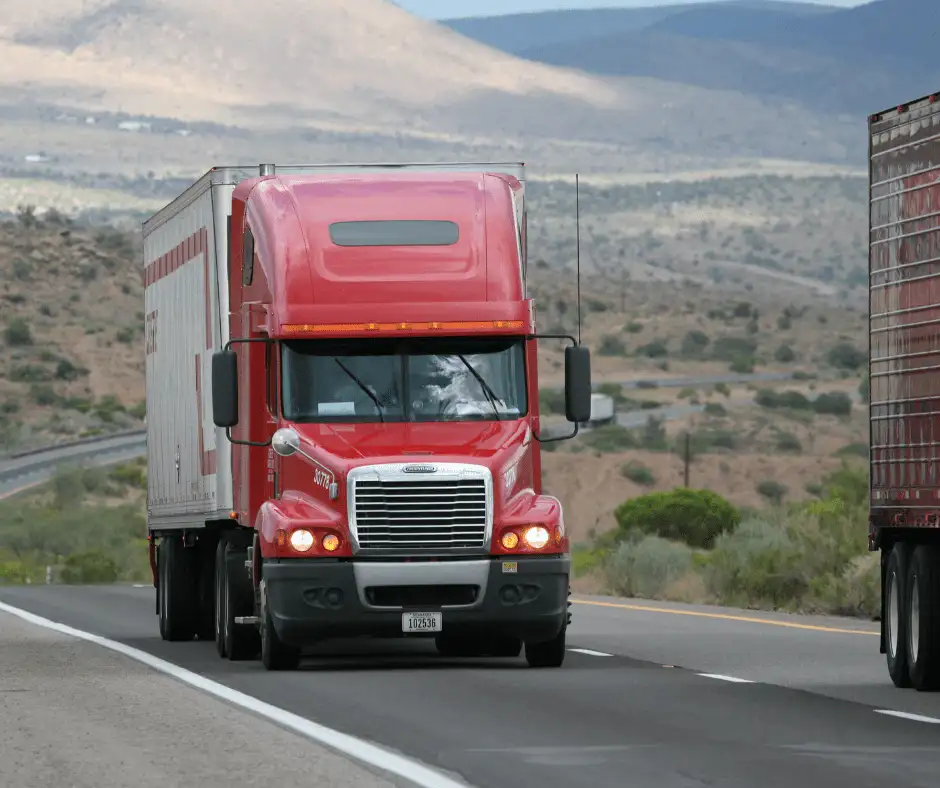
In all our years as truck accident attorneys in Washington State, we see the most serious claims arise from accidents involving commercial trucks. The size and weight of the truck, compared to those of a standard passenger vehicle, means that when a crash happens, the likelihood of serious or fatal injuries increases. If you suffered injuries in a collision with a large truck, speak with a Washington truck accident lawyer as soon as possible.
Another aspect of commercial truck accidents is that the injured victims are often very traumatized by their experiences. Driving on freeways that are full of commercial trucks can be an excruciating experience for survivors of trucking crashes.
A truck accident can turn your life upside down in an instant. You may be facing physical pain, financial stress, and emotional trauma. You don't have to go through this alone. We're here to listen, stand by your side, and fight for the justice and compensation you need to rebuild your life.
At Brett McCandlis Brown & Conner, our greatest advantage is our extensive experience working with clients injured in commercial truck accidents. Our Washington truck accident attorneys understand what our clients will be facing as they move toward recovery. We know how to build complete and compelling personal injury claim, and how the multiple insurance companies involved in a trucking crash will respond.
Truck accident evidence helper
What Evidence Can Strengthen a Washington Truck Accident Claim?
Truck accident claims often involve more evidence than a standard car crash, including company records,
truck maintenance issues, driver logs, cargo details, and multiple insurance companies.
Truck accidents can be categorized into several different types. The most common ones we see include the following.
Jackknife Accidents
A jackknife accident occurs when a truck’s trailer swings around toward the truck cab, forming a 90-degree angle. Braking too quickly is one of the most common causes of jackknife accidents. These are especially dangerous because the truck can drift into other lanes or even into oncoming traffic, resulting in multiple injuries or fatalities.
Rollover Accidents
Large trucks are prone to rollovers, which can happen in several different ways. Perhaps the driver was going too fast around a curve or over-corrected. When a rollover occurs, drivers traveling alongside the truck are at serious risk of injury because the truck can roll over onto their vehicles.
Underride Accidents
If a trucker steps on the brake too fast, the vehicle behind might not have time to stop. The vehicle can collide with the truck and become trapped underneath. Underride accidents are especially terrifying for motorists in smaller vehicles. The Department of Transportation requires trucks with trailers to have rear safety bars to help prevent underride accidents. Federal regulations also require that rear impact guards be examined as part of the required annual commercial vehicle inspections. However, damaged or inadequate guards may still fail to provide sufficient protection.
Head-on Collisions
A head-on collision with a large truck often involves one or more fatalities. Motorists who are trying to pass on one-lane roads can cause head-on crashes.
Wide-turn Accidents
Large trucks need to swing wide when making a right turn. If a car tries to pass on the right, it can become trapped between the front and rear of the trailer.
Mechanical Issues
Tire blowouts and brake failures are also common causes of truck accidents. If a tire explodes or brakes fail, the truck driver might lose control and crash into other vehicles or stationary objects.
It’s common for there to be multiple contributing factors in an accident. For example, a truck driver who has been on the road too many hours could be fatigued and also speeding because they are trying to reach their delivery destination sooner.
What You Should Do Following a Truck Accident
Your actions following an accident can affect your potential compensation down the line. Start by contacting the police if no one else has. Request medical support at the scene. Depending on the severity of your injuries, if you can safely take photos of the scene, you should. Take pictures of all the vehicle and truck damage, skid marks, and any other elements in the surrounding area that could be important in the claims process.
If your injuries don’t warrant emergency transportation to the hospital, it’s crucial to see a doctor as soon as possible. Even if you don’t think your injuries are serious, get checked out. You could have internal injuries that you don’t know about. Failure to seek timely medical treatment can also harm your claim because the defendant’s insurance company will allege your injuries weren’t severe.
It’s important to report the claim to the truck driver’s insurance provider and employer. However, you must be cautious of what you say. Insurance adjusters are looking for anything they can use against you. The adjuster will ask you to consent to a recorded statement. You should speak with a truck accident attorney before agreeing to give a statement.
The insurance company will also lead you to believe you don’t need an attorney early on in the claims process. Do not be persuaded by them. The defendant’s insurance company and the trucking company are not on your side. You need a legal advocate to protect your rights.
Who Is Liable in a Truck Accident?
In Washington, your truck accident claim may be filed against the truck driver, the driver’s employer, and the owner of the trucking company or other responsible parties.
According to Washington’s rule of respondeat superior, an employer is generally liable for an employee’s negligence that occurs within the course of employment. It will be important to determine whether the driver was an employee and whether they were acting within the scope of employment when the accident occurred.
Washington truck accident claims may also include grounds that the employer was negligent in the way it hired, retained, or supervised an employee.
Third-Party Claims
More than one business can be held responsible when their individual actions have led to your injuries in the truck accident. The fault-allocation law in Washington allows determining the percentage of responsibility for each party at fault, although exceptions permit defendants to be jointly and severally liable.
Third-party liability may be attributed to parties such as the:
Motor carrier,
Trailer owner,
Maintenance contractor,
Cargo-loading company, and
Manufacturer of a defective truck or component.
The question of liability will depend on the actions of each party and on whether those actions contributed to the accident. Under Washington law, the factfinder is generally required to assess the proportion of fault belonging to each entity that caused the claimant’s damages.
For example, a maintenance company or repair shop may be held responsible if its workers perform repairs or maintenance carelessly, causing a truck accident. To make such a claim, it is generally necessary to produce evidence linking the allegedly faulty work to the mechanical fault and to the collision that followed.
In addition, the Washington Product Liability Act allows claims to be brought against manufacturers if an unsafe truck or part causes injury. The law covers defects relating to design or construction, as well as insufficient warnings or instructions, and different legal standards apply depending on the type of defect alleged.
At Brett McCandlis Brown & Conner, our Washington truck accident lawyers are here to help you with the complicated process of determining who is liable in a truck accident so you can focus on healing.
Proving Liability in a Washington Truck Accident
Proving liability in a truck accident requires a thorough investigation. To successfully prove a defendant is liable for your injuries, you must show the defendant was negligent. There are four things you must prove to show a defendant was negligent:
The defendant owed you a legal duty;
The defendant breached their legal duty;
The breach is what led to your injuries; and
You sustained damages.
All motorists owe each other a duty to drive responsibly and follow all traffic laws and regulations. When someone speeds, runs a red light, or drives under the influence, they likely have breached their legal duty. You must also show the defendant’s breach of duty caused your injuries.
If something unrelated to the defendant’s breach led to the accident and your injuries, that defendant might not be liable for your injuries. Your Washington truck accident attorney will explain how these factors apply to your particular case and help you gather evidence to make your liability claim stronger.
Recoverable Compensation in a Washington Truck Accident
The amount of money you can collect from a truck accident claim depends on various circumstances, such as who is liable, the severity of your injuries, and the amount of damages. Damages are the tangible and intangible losses you suffer in an accident. Examples of potential damages include:
Victims with more severe injuries typically have more damages. An experienced lawyer can determine if your case would benefit from experts who can help you more accurately calculate your damages. If you don’t have a Washington truck accident lawyer representing your interests, you might lose out on valuable compensation.
What Does a Successful Trucking Accident Claim Look Like?
Attorney insights
How Our Lawyers Look at a Washington Truck Accident Case
A serious truck accident claim is not handled like a standard car accident case. The first questions are usually about who controlled the truck, what records exist, what safety rules applied, what evidence may disappear, and how the crash changed the client’s life now and in the future.
Our perspective
When we review a truck accident case, we start by separating the story the insurance company wants to tell from the evidence that can actually prove what happened. That means looking at driver conduct, company records, maintenance history, cargo issues, black box data, medical proof, wage loss, and future care needs.
The trucking company may already have investigators, adjusters, and defense teams working on the case. Our job is to make sure the injured person’s story is not reduced to a claim number, a repair estimate, or a quick settlement offer before the full damage is understood.
Who are your trucking accident lawyers?
Meet the Attorneys Behind the Truck Accident Claim Strategy
David Brown
“We do not let the insurance company define the case for the client.”
David’s perspective is practical and direct. In a truck accident case, that means identifying the companies, insurance layers, safety records, and early defense arguments before the case is framed only around the driver’s version of events.
What evidence proves how the crash happened?
Which company, driver, contractor, or insurer may be involved?
What argument will the insurance company use to reduce the claim?
Matt Conner
“The financial impact has to be built with evidence, not assumptions.”
Matt’s economics background helps shape the damages side of a trucking case. When injuries are serious, the case may need to account for medical costs, future treatment, lost earning capacity, long-term care, and the real financial pressure placed on the client and family.
What are the current and future medical costs?
How did the crash affect income, work capacity, and daily function?
Does the case need expert support for future losses?
Paula McCandlis
“Pain and suffering must be explained in human terms.”
Paula’s focus is on translating the injury into a clear damages story. In a truck accident case, that means showing how the crash changed movement, independence, family life, sleep, fear, pain, routines, and the client’s ability to feel normal again.
How did the injury change the client’s everyday life?
What losses cannot be shown by medical bills alone?
How can the case explain pain, fear, and long-term disruption clearly?
Truck accident case studies
Case Results That Show the Evidence Behind Truck Accident Claims
These examples show why trucking cases often require a deeper investigation into company conduct, commercial vehicle operation, safety failures, medical damages, and long-term impact.
Fatal trucking accident$4.2M
Trucking company liability
Recovery involving a 76-year-old woman who was killed by a trucking company. The case reflects how truck crash claims may focus on company responsibility, not only driver conduct.
Work truck injury$3M
Man backed over by work truck
A temporary worker was backed over by a company truck and suffered serious injuries. The case required examining whether the injured worker could pursue a claim outside the usual workers’ compensation limits.
Tractor-trailer crash$1M
Head-on collision with bad brakes
Recovery for a client severely injured in a head-on collision with a tractor-trailer with bad brakes. The case shows why maintenance, speed, road conditions, and company safety failures can matter.
Past results do not guarantee future outcomes. Every truck accident case depends on its own facts, evidence, injuries, insurance coverage, and applicable law.
Our view: a truck accident case is built before the insurance company controls the story.
Driver logs, black box data, maintenance records, company policies, cargo records, medical proof, and long-term damages should be reviewed early.
When a client is suffering from injuries caused by an at-fault truck driver, our Washington truck accident lawyers take special steps to identify the extent of their injuries and damages and to determine how the collision affects our client’s life, now and in the future.
Many injuries require long-term, costly medical care, and we ensure that this cost is fully factored into the insurance-claim process. A successful claim is one in which our client receives a settlement or verdict that enables them to fully recover financially and compensates them for their current and future losses.
What Factors Affect a Truck Accident Settlement in Washington?
In Washington, the value of a truck accident settlement depends on the details of each case, not a set formula. A key factor is how strong the evidence is for proving who was at fault.
Washington uses a pure comparative fault system. This means if you are partly at fault, your compensation can be reduced by your percentage of fault, but you can still recover damages. If more than one person or business caused the accident, Washington law has rules for dividing fault among them.
The amount of insurance available and the number of people or companies legally responsible can also affect settlement talks. In commercial trucking accidents, multiple defendants or insurance policies may be involved. Figuring out each party’s share of responsibility can change how a claim is settled. Usually, Washington law makes each defendant pay for their share of the damages, but there are exceptions where more than one party can be jointly responsible for damages.
The quality and thoroughness of your documentation can also affect negotiations for a truck accident settlement in Washington. Disagreements about how the accident happened, whether the crash caused certain injuries, how serious the lasting effects are, or the amount of financial losses claimed can all influence what an insurer might offer. Because of these factors, there is no standard settlement amount in Washington that can predict what your claim will be worth.
Are There Limits on Your Recovery Amount?
Generally, Washington does not impose a statutory cap on the amount of compensatory damages you may recover in an ordinary truck accident claim. While there was previously a statutory limit on noneconomic damages, the Washington Supreme Court held that limit unconstitutional in Sofie v. Fibreboard Corp. The statute containing that limit was later repealed by the Legislature in 2023.
The amount that can actually be recovered depends on the damages that can be proven, the applicable rules concerning fault, the defendants and assets available to satisfy a judgment, and available insurance coverage. Certain types of claims or defendants may also be subject to different statutory rules, so whether any special limitation applies must be evaluated on a case-by-case basis.
FAQs About Truck Accidents
When Should I Hire a Semi Truck Accident Attorney in Washington?
After seeking the medical attention you need, hiring a semi truck accident attorney should be a priority. Commercial truck accident claims can involve evidence, regulations, and potentially responsible parties that do not typically arise in ordinary car accident cases. Depending on the circumstances of a Washington truck crash, potentially useful evidence may include electronic logging device (ELD) data, hours-of-service records, vehicle inspection and maintenance records, cargo-securement compliance, truck weight compliance, and information about the driver’s qualifications.
An experienced Washington truck accident lawyer can identify which records may be important, determine what state and federal trucking regulations apply, and investigate whether violations or other evidence may help establish liability. Because some trucking records may be retained for only limited periods, having an attorney independently investigate and seek relevant evidence early can also be important to your claim for compensation.
How Will an 18-Wheeler Accident Lawyer Handle a Claim Differently Than a Regular Car Accident Claim?
An 18-wheeler accident lawyer may need to investigate more parties and sources of insurance coverage than in a typical car accident claim. Depending on the circumstances, the lawyer may examine whether responsibility extends beyond the truck driver to the trucking company or other businesses involved in the truck’s operation. Because commercial trucking claims can involve multiple defendants and substantial insurance coverage, determining liability and pursuing compensation may require a broader independent investigation and claims strategy.
How Many Hours Can a Commercial Truck Driver Legally Drive?
Federal hours-of-service rules generally limit a property-carrying commercial driver to 11 hours of driving after 10 consecutive hours off duty, within a 14-hour driving window. Most commercial drivers are also subject to weekly limits and required rest-break rules. Washington has adopted federal hours-of-service regulations for covered commercial motor carriers operating in the state.
Are Washington Truck Drivers Required to Use Electronic Logging Devices?
Many commercial truck drivers who are required to maintain duty status records must use an electronic logging device (ELD) to record their driving and on-duty time. Federal law provides exceptions for certain drivers, including qualifying short-haul drivers and drivers who use paper logs for no more than eight days in a 30-day period.
ELD records can provide information about a driver’s driving and duty time and may help determine whether hours-of-service requirements were followed before a crash. Federal regulations generally require motor carriers to retain ELD records of duty status and backup data for six months.
What Are Washington’s Weight Limits for Commercial Trucks?
Washington law generally prohibits more than 20,000 pounds on a single axle, while allowable weights for groups of axles depend on the number and spacing of those axles. For example, a tandem-axle group is generally limited to 34,000 pounds under the statutory weight table. Special permits and other exceptions can apply.
Are Trucking Companies Required to Inspect and Maintain Their Trucks?
Yes. Washington has adopted federal commercial motor vehicle safety regulations that govern inspection, repair, and maintenance. Washington State Patrol may also inspect commercial vehicles for equipment, driver qualifications, and hours-of-service compliance, and may place an unsafe vehicle out of service.
Are There Special Rules for Securing Cargo on Commercial Trucks?
Federal cargo-securement rules require cargo on covered commercial vehicles to be properly immobilized or secured so it does not shift or fall from the vehicle. Depending on the cargo, the rules establish requirements involving tiedowns, blocking, bracing, working-load limits, and other securement methods.
Do Federal Trucking Regulations Apply to Trucks That Operate Only Within Washington?
Federal regulations directly govern many interstate trucking operations, but Washington has also incorporated numerous federal motor-carrier safety standards into its rules for both intrastate and interstate commercial motor carriers. Washington’s current regulations incorporate federal provisions covering areas including driver qualifications, drug and alcohol testing, hours of service, equipment, financial responsibility, and vehicle maintenance, subject to specified state exceptions.
Do I Need to Hire a Seattle Truck Accident Lawyer If My Accident Occurred on I-5, I-90, or Another Major Freight Route?
You are not legally required to hire a Seattle truck accident lawyer because your crash occurred on I-5, I-90, or other major freight routes, such as SR 99, SR 509, or SR 599. In a Seattle-area truck crash, determining the precise location of the collision and the parties involved can affect where the case may be properly filed.
Hiring an attorney may be particularly useful when a highway truck crash involves disputed fault, multiple businesses or insurers, serious injuries, or questions about where to file a lawsuit and against whom. Our Seattle truck accident lawyers can handle communications and negotiations with the parties involved and, if necessary, navigate the procedural requirements of a civil lawsuit in Washington.
Hire a Washington Truck Accident Lawyer and Get the Justice and Compensation You Deserve!
As truck accident lawyers, we have achieved extraordinary results for our clients after a truck crash, including:
Call Your Washington Truck Accident Attorneys Today!
If another driver’s negligence caused you injuries in a truck accident, let the skilled legal team at Brett McCandlis Brown & Conner protect your legal rights. We aren’t afraid to stand up to trucking companies and their legal departments. With over 40 years of experience, our attorneys are prepared to take your case to trial if necessary and won’t back down from a fight. Schedule an initial consultation with a Washington truck accident lawyer at our firm to learn how we can assist you in pursuing the compensation you deserve. Contact us today!
Legal References Used to Inform This Page
To ensure the accuracy and clarity of this page, we referenced official legal and other resources during the content development process:
David Brown and Judy Wagner are the DREAM TEAM! They are amazing! They listened, kept me informed, walked me through the whole process, they were so kind and caring and because of David and Judy, I was able to receive a much larger settlement than I expected. I am truly so thankful for them.
— Kim Chastain
David Brown was a phenomenal lawyer, getting us the best settlement possible after our son was injured in a dog attack. Cannot day enough good things about him and his team. Thank you David & Judy!!
— Christy Kivari
I hired Adam Engst six years ago after I was in a car accident. I injured my neck and back and have struggled with for many issues since my accident. Adam fought hard for my settlement for six years and got me more money than I could’ve imagined. He also continued to fight for me after my settlement closed for overpayment to care providers. He and his paralegal Nichole are absolutely amazing. I cannot recommend him enough!!
— Holly Braaten
Working with David Brown empowered us to understand the legal processes we encountered to make informed and appropriate decisions. His ability to make complex things simple was truly remarkable. David was excellent with his communication, support and expertise throughout the process.
— A Butcher
After a serious biking accident, my wife and I thought it would be simple dealing with insurance companies. Well, it's not! We are so thankful we hired a personal injury attorney. Matt Conner helped us navigate this complicated process as I was recovering from multiple injuries. We appreciated his expertise and compassion, as well as the clear communication with both Matt and his excellent paralegal, Maddi. We highly recommend Matt Conner and his team!
— John E
Matt and the team at BMBC were terrific! Highly recommend! They are so nice, and a great pleasure to work with. We had a matter that required his expertise. My wife and I are so thankful for his care, compassion and understanding. He listened and heard our concerns, and through his skill and experience, was able to advocate very effectively on our behalf. Along the way, he and the staff were kind and attentive, and everything you'd want from a law firm in our circumstances. Thank you!!
— Scott R
Thank you Matt Conner and team (especially Lauren and Maddie). You patiently navigated through all the obstacles to get the best possible outcome for me and my case. Anyone going through the trauma of injury from an accident can expect the utmost compassion, professionalism and honesty from Matt and his team. I highly recommend this firm.
— Diane K
I had the opportunity to work with Matt Conner after I was the victim of a DUI collision in downtown Bellingham. My car was totaled, and I sustained injuries as a result of the accident. I almost didn’t make the call to Matt, but I am truly grateful that I did.
From the beginning, Matt was compassionate, responsive, and incredibly helpful. He guided me through every step of the process with clear communication and sound advice. Anytime I had questions, he was quick to respond and always took the time to ensure I understood my options.
Matt’s professionalism, combined with his genuine care for ME, made a difficult situation much more manageable. I wouldn’t hesitate to recommend him to anyone in need of legal representation.