Free Consultation



Seattle Truck Accident Lawyers
Seattle Truck Accident Lawyer

Commercial trucks are a common sight on Seattle roads. From Interstate 5 to SR 520, these vehicles help keep businesses and communities moving throughout Washington. But because commercial trucks are much larger and heavier than passenger vehicles, accidents involving them often result in more serious injuries and more complex legal claims.
Our Seattle truck accident lawyers have spent decades helping injured people throughout Washington after catastrophic trucking collisions. At Brett McCandlis Brown & Conner PLLC, we know how overwhelming this experience can be. Many truck accident survivors struggle not only with physical injuries but also with anxiety about driving, financial stress, and frustration over dealing with insurance companies.
Our job is to take that pressure off your shoulders. We know how to investigate trucking accidents, uncover safety violations, and build strong claims designed to pursue the full compensation our clients deserve.
Our Seattle main office:
- Location: Columbia Tower, 701 5th Ave 42nd Floor, Seattle, WA 98104
- Open hours: Monday-Friday, 8:30 a.m. – 5 p.m.
- Phone number: 206-985-9600
- Map Directions
When an 18 Wheeler Accident Happens

The odds say that you will probably never become a truck accident victim. But the odds no longer matter once an accident has already occurred. And hardly a day goes by in the Seattle area without at least one big-rig truck accident.
For many truck accident victims, life will never be the same again. You are likely to be facing serious injuries and a long recovery period – and you may be grieving the sudden death of a loved one.
The occasion of a serious accident is the worst time to have to fight for your right to fair compensation. But if the accident that harmed you was someone else’s fault, you are going to have to fight. Fear not.
At Brett McCandlis Brown & Conner PLLC, fighting for the rights of our clients is what our Seattle trucking accident attorneys do – and it’s what we’ve been doing for nearly 50 years now. All told, we have brought home over $100,000,000 in compensation for our clients.
What Should You Do After a Truck Accident in Seattle?
The moments following a truck accident can feel overwhelming. Collisions involving commercial vehicles often result in serious damage, and injuries may not be immediately apparent. Taking the right steps early can help protect both your health and your ability to pursue compensation.
After a crash, consider taking the following actions:
- Call 911 and request emergency medical assistance;
- Report the incident to law enforcement and obtain a police report;
- Seek medical evaluation, even if symptoms seem minor;
- Document the scene with photographs of vehicles, roadway conditions, and injuries;
- Collect contact and insurance information from all involved parties; and
- Identify the trucking company and note any identifying markings on the vehicle.
Prompt medical care helps ensure that injuries are properly diagnosed and documented. Early treatment also reduces the likelihood of disputes about the seriousness of your condition.
A Seattle truck accident lawyer can assist in preserving key evidence, including electronic logging data and inspection records that may not be retained indefinitely.
What Is the Statute of Limitations for Seattle Truck Accident Claims?
Washington law sets a deadline for filing personal injury lawsuits. In most truck accident cases, individuals have three years from the date of the collision to file a claim.
This timeframe applies to claims seeking compensation for injuries, lost income, and other damages. Missing the filing deadline may prevent recovery entirely.
Truck accident cases often involve evidence that can be lost over time. Driver logs, maintenance records, and onboard data may only be preserved for limited periods. Acting early helps ensure that this information remains available.
A Seattle truck accident attorney can evaluate deadlines, preserve evidence, and ensure that required steps are completed within the applicable timeframe.
What Is the Impact of Federal Trucking Regulations on an Accident Claim?
Commercial trucking is governed by federal safety regulations enforced by the Federal Motor Carrier Safety Administration. These rules establish standards for driver conduct, vehicle maintenance, and operational limits.
Key areas of regulation include:
- Hours-of-service limits that restrict how long drivers may operate without rest,
- Inspection and maintenance requirements for commercial vehicles,
- Weight restrictions and cargo securement standards, and
- Drug and alcohol testing requirements for drivers.
Violations of these regulations can contribute directly to accidents. For example, fatigue from exceeding driving limits or mechanical failures caused by poor maintenance may increase the risk of a collision.
A Seattle truck accident lawyer may review these regulations to determine whether safety violations contributed to the crash.
What Types of Trucks Are Involved in Seattle Accidents?
Seattle’s transportation network supports a wide range of commercial vehicles. Each type presents different risks depending on size, cargo, and operating conditions.
Truck accident cases may involve:
- Semi-trucks transporting goods along Interstate 5 and other major corridors,
- Tanker trucks carrying fuel or hazardous materials,
- Logging trucks operating throughout Washington’s timber industry,
- Delivery trucks navigating dense urban areas, and
- Construction vehicles transporting heavy equipment or materials.
The type of vehicle involved can influence both the cause of the accident and the severity of injuries.
Common Causes of Truck Accidents
The following are some of the most common causes of truck accidents:
- Distracted driving. Even a brief distraction behind the wheel of a commercial truck can lead to a serious collision. Activities such as texting, using a GPS, eating, or adjusting controls inside the cab can take a driver’s attention away from traffic and reduce reaction time.
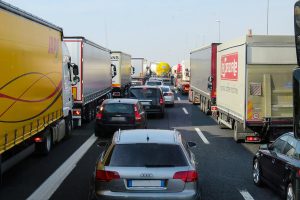
- Driving while under the influence of alcohol or another intoxicant. Alcohol, recreational drugs, and certain prescription medications can impair a truck driver’s judgment, coordination, and reaction time. Because commercial trucks are so large and difficult to stop quickly, impaired driving often leads to severe collisions.
- Driver fatigue. Truck drivers often spend long hours on the road, and fatigue can slow reaction time, reduce focus, and impair decision-making. A tired driver may drift between lanes, miss traffic signals, or fail to stop in time to avoid a collision.
- Mechanical malfunction. If the accident was caused by a manufacturing or designdefect in one of its parts (brake drums, for instance), it is possible to sue the manufacturer of the part or sue even a wholesaler or a retailer who sold the defective part, without even having to prove that the defendant was at fault for the defect.
- Poor truck maintenance: Commercial trucks require regular inspections and maintenance to operate safely on the road. Worn brakes, tire failures, steering problems, and other mechanical issues can increase the risk of a serious accident when maintenance is ignored or delayed.
- Inadequate driver training. Operating a commercial truck safely requires specialized training and experience. Drivers who are not properly trained may struggle with braking distances, wide turns, cargo handling, or reacting safely in heavy traffic and poor weather conditions.
- Overloading. Federal regulations govern the maximum amount of cargo that a truck is permitted to carry. Failure to follow these regulations can lead to elongated stopping distances, tire blowouts, and jackknife accidents.

Let a knowledgeable Seattle truck accident lawyer answer all your questions.
Types of Truck Accidents
Truck accidents can be categorized into several different types. The most common types of truck accidents include the following:
- Jackknifes. These occur when the trailer slides out and comes around toward the truck’s cab.
- Rear-end collisions. A large commercial truck can rear-end a passenger car or vice versa. Large trucks require significant space to stop. When trucks do not have enough space to stop safely, that can cause catastrophic rear-end collisions involving multiple vehicles.
- Rollovers. Trucks can easily lose their balance and tip over due to overloading, stopping suddenly, adverse weather, and more.
- Blindspot collisions. Eighteen-wheeler trucks have massive blindspots. When cars drive in those blindspots, it can lead to a collision if the truck driver changes lanes or turns.
- Left-hand turn collisions. Left-hand turn collisions often happen when a driver turns in front of an oncoming truck without realizing how quickly the truck is approaching or how long it takes to stop. Because commercial trucks need more distance to slow down safely, these crashes can cause severe damage at intersections.
- Underride accidents. When a vehicle rear-ends a truck and goes under it, that is called an underride accident. Many trucks now have protective guards to prevent an underride in the event of a rear-end accident.
- Head-on collisions. Head-on truck accidents occur when a commercial truck and another vehicle collide from opposite directions. Because of the size and weight of commercial trucks, these crashes frequently cause severe or fatal injuries.
These are just some of the common types of truck accidents. If you were involved in a truck accident, speak with an experienced Seattle truck accident attorney about the facts and circumstances of your case to learn about your legal options.
Common Truck Accident Injuries in Seattle
Most 18-wheeler accidents involve serious to catastrophic injuries because of the large size and weight differences between trucks and passenger vehicles. Some of the most common injuries we see include:
- Spinal cord injuries, including partial or complete paralysis,
- Traumatic brain injuries,
- Disfigurement,
- Burns,
- Broken bones,
- Crushed or severed limbs,
- Skull fractures,
- Internal injuries, and
- Severe scarring.
Some injuries heal in time, but other accident victims may have permanent damage. They may need lifelong medical care or be forced to go on disability.
Even if your injuries don’t immediately appear to be severe, you might later find out you need treatment or household assistance to help you with daily activities.
That’s why you need a skilled Seattle truck accident lawyer on your side who can help you pursue the maximum compensation for your injuries.
Determining the value of your injuries depends on the type and severity of your injuries, who is liable, and the overall amount of your damages.
What Are Common Seattle Truck Accident Hotspots?
Seattle’s heavy traffic and crowded urban streets can increase the risk of commercial truck accidents, especially during rush hour and periods of poor weather. Major highways such as Interstate 5, Interstate 90, and State Route 99 carry large volumes of both commuter and commercial traffic every day.
Truck accidents also frequently occur on heavily traveled streets such as Aurora Avenue North, Rainier Avenue South, East Marginal Way South, and Spokane Street, where commercial vehicles regularly share the road with passenger vehicles, cyclists, and pedestrians. Areas near downtown Seattle, the Port of Seattle, and industrial districts often experience especially high levels of truck traffic.
Congestion, merging traffic, sudden stops, and limited visibility can all increase the likelihood of collisions involving large commercial vehicles. Understanding where and how an accident occurred can help identify contributing factors and determine liability after a crash.
How Do You Prove Negligence in a Truck Accident Case?
Recovering compensation requires showing that negligence contributed to the accident. This involves demonstrating that a party failed to exercise reasonable care.
A claim generally requires evidence showing:
- A duty of care existed,
- That duty was breached through unsafe conduct,
- The breach caused the accident, and
- The accident resulted in damages.
Evidence in trucking cases is often extensive. It may include electronic logging data, maintenance records, driver qualification files, and witness statements.
Accident reconstruction specialists may also analyze factors such as speed, braking distance, and vehicle positioning. Their findings can help establish how the collision occurred.
A Seattle head-on truck accident lawyer can gather and interpret this evidence to support a claim.
Can Multiple Parties Be Liable?
Truck accident cases often involve multiple layers of responsibility. Liability may extend beyond the driver and include other entities involved in the operation of the vehicle.
Potentially responsible parties may include:
- The truck driver,
- The trucking company or carrier,
- A shipper or loading company responsible for cargo,
- A manufacturer of defective parts or equipment, and
- A maintenance provider responsible for repairs.
Each party may carry separate insurance coverage. Identifying all responsible entities can significantly affect the total compensation available.
A Seattle truck accident attorney conducts a detailed investigation to determine how each party contributed to the accident.
What Is Washington’s Comparative Fault Law?
Washington follows a pure comparative fault system. An injured person may recover compensation even if they share some responsibility for the accident.
Any recovery is reduced based on the percentage of fault assigned. For example, a person found to be 20% responsible will have their compensation reduced by 20%.
Insurance companies may attempt to assign a higher percentage of fault to reduce payouts. A thorough investigation helps ensure that fault is evaluated fairly.
What Damages Are Recoverable with a Seattle Truck Lawyer’s Assistance?
Recoverable damages in a truck accident case depend on the circumstances of your injuries. In general, damages can be divided into economic and noneconomic damages.
Your economic damages are tangible financial losses that can be calculated by adding up your accident-related expenses.
Noneconomic damages are more challenging to calculate because they compensate you for subjective losses such as mental or psychological harm. In general, recoverable damages can include:
- Medical expenses to date,
- Future expected medical costs,
- Lost wages,
- Future loss of earning capacity,
- Home modifications needed to accommodate a disability,
- Property damage,
- Pain and suffering,
- Loss of enjoyment of life,
- Loss of consortium,
- Mental anguish, and
- Wrongful death.
Truck accidents often result in serious injuries, which can increase claim value. Evaluating future costs is important because ongoing care may be required. A Seattle truck accident attorney can assess these factors and help ensure that all damages are considered before accepting any settlement.
When you hire us to represent you, we will do our best to build a strong case for the maximum amount of compensation you are eligible to receive. We may need to hire experts who can help establish compensation for future medical expenses, disability, disfigurement, and more. Without our assistance, you may be demanding far less than your injuries are worth.
How a Seattle Truck Accident Lawyer Builds Your Case
Truck accident claims often involve complex regulations, multiple parties, and significant damages. Insurance companies may have teams dedicated to minimizing liability.
Your case requires a structured and detailed approach. Building a strong claim involves more than gathering basic information. It requires a comprehensive understanding of both the facts and the applicable legal standards.
The process may include:
- Conducting a thorough investigation of the accident scene,
- Securing time-sensitive evidence such as driver logs and onboard data,
- Reviewing company safety records and regulatory compliance,
- Accurately determining liability,
- Coordinating with medical professionals to document injuries,
- Evaluating long-term care needs and financial impact,
- Preparing a detailed demand that reflects all damages, and
- Negotiating a settlement that reflects the full extent of damages.
Each step strengthens the claim and presents a clear picture of how the accident occurred and how it has affected the injured person.
Well-prepared cases may lead to stronger negotiation outcomes because insurers recognize the level of documentation and readiness for litigation.
We work with individuals throughout Seattle who have been injured in truck accidents. Our team focuses on building strong claims, handling insurance negotiations, and pursuing compensation that reflects the full impact of each case.
If you are unsure about your next steps, speaking with our Seattle truck accident lawyers can provide clarity and help protect your future.
Mistakes to Avoid After a Truck Accident
Certain decisions made after an accident can affect the outcome of a claim. Understanding what to avoid can help protect your ability to recover compensation.
Common mistakes include:
- Delaying medical treatment,
- Failing to document injuries or accident details,
- Providing recorded statements without speaking to a lawyer first,
- Accepting a quick settlement without evaluation, and
- Posting about the accident on social media.
These actions can create challenges during the claims process. Insurance companies may use gaps in treatment or inconsistent statements to dispute the claim.
Taking a careful approach helps avoid these issues.
Our Most Frequent Practice Areas
At Brett McCandlis Brown & Conner PLLC, truck accidents aren’t the only type of injury claim we handle.
The following are some of the other types of claims that we pursue:
- Wrongful death. If a person dies because of injuries suffered in a truck accident, certain surviving family members may have the right to pursue a wrongful death claim. These claims can seek compensation for losses such as funeral expenses, lost financial support, and the emotional impact of losing a loved one.
- Auto accidents. Auto collision accidents can leave injured people dealing with medical bills, missed work, and ongoing pain. We help accident victims pursue compensation when another driver’s negligence caused the crash.
- Motor vehicle accidents. Motorcycle riders have very little protection in a collision with a larger vehicle. As a result, motorbike accidents often cause serious injuries that require extensive medical treatment and long-term recovery.
- DUI accidents. Drivers who operate vehicles while impaired put everyone on the road at risk. We help injured people hold intoxicated drivers accountable after serious accidents caused by drunk or drug-impaired driving.
- Bicycle accidents.Bicycle accidents often happen when drivers fail to notice cyclists or leave them enough space on the road. Because cyclists have little physical protection, these collisions can result in severe injuries.
- Pedestrian accidents. Pedestrians are especially vulnerable in traffic accidents because they have no protection from the force of impact. Even low-speed collisions can cause serious or life-changing injuries.
- Traumatic brain injury (TBI). A traumatic brain injury can affect memory, concentration, speech, mood, and many other parts of daily life. Some brain injuries cause long-term symptoms that require ongoing medical care and rehabilitation.
- Medical errors. Mistakes by healthcare providers can lead to serious injuries, worsening medical conditions, or preventable complications. These cases often require careful investigation to determine whether medical malpractice occurred.
We also handle dog attacks, product liability, defective drugs, slip and fall accidents, and more.
Frequently Asked Questions (FAQs)

Have you been involved in a truck accident? If so, you may be in a state of shock, and you may feel overwhelmed.
You may find yourself feeling strained by the mounting pressure of medical bills and the loss of your ability to work. You may be struggling with many questions.
At Brett McCandlis Brown & Conner PLLC, we understand these feelings, and we also understand the need to find answers to those questions that arise following a truck accident.
Here are a few of the most common questions we receive.
What Are the Main Differences Between a Typical Auto Accident Case and a Typical Truck Accident Case?
Truck accident cases often involve more severe injuries than standard car accidents because commercial vehicles are much larger and heavier than passenger cars. They are also more legally complex, since liability may involve multiple parties and extensive state and federal trucking regulations, along with evidence such as driver logs, maintenance records, and electronic driving data.
How Much Liability Insurance Are Commercial Truckers Required to Carry?
Under both state and federal law, a commercial truck is required to carry anywhere between $300,00 and $5,000,000 in liability insurance, depending on the weight of the truck and how dangerous its cargo is. The heavier the truck and the more dangerous the cargo, the higher the minimum insurance coverage limits.
What exactly is a “commercial truck”
A commercial truck is a vehicle used in business or for the transport of commercial goods. “Eighteen-wheelers” is a good example, but not the only example. These trucks require a commercial driver’s license to operate, and their operation is heavily regulated at both the state and federal levels.
Where Are a Truck’s “Blind Spots?”
Commercial trucks have large blind spots along both sides of the trailer, directly behind the truck, and immediately in front of the cab, where smaller vehicles may disappear from the driver’s view. A good rule of thumb to observe is that, if you can’t see the driver in his mirrors, then he can’t see you.
Who Should I Sue in a Truck Accident?
The truck driver may be liable for the accident, but responsibility can also extend beyond the driver alone. Depending on the circumstances, liability may also involve the trucking company, a maintenance provider, a cargo loading company, a parts manufacturer, or even a government entity responsible for unsafe road conditions.
Truck accident cases can involve multiple layers of responsibility, which is why a thorough investigation is often necessary to determine who should be held accountable.
What Are Some Examples of Trucking Regulations That Might Be Relevant to My Claim?
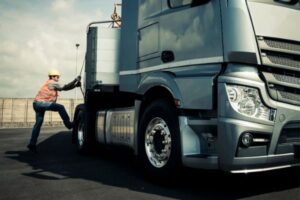
Trucking regulations at the state level and the federal level (issued by the FMCSA) regulate aspects such as:
- Maintenance schedules,
- Weight limits,
- The number of hours a driver can work per day,
- Minimum driver training, and
- Permissible blood alcohol levels, which are significantly lower for drivers holding a commercial license than for other drivers
Violations of these regulations can help show how the accident happened and who may be liable.
How Does a Truck Accident Legal Team Conduct a Truck Accident Investigation?
We take the following actions in a typical truck accident case:
- Request the driver qualification file (DQF) from the trucking company,
- Examine the truck’s event data recorder (“black box”) for relevant data.
- Collect eyewitness testimony,
- Review police reports,
- Examine the scene of the accident.
- Inspect the truck, and
- Take other actions as circumstances demand.
We use this information to determine how the accident occurred, identify all potentially liable parties, and calculate damages that fully reflect the impact of the crash.
How Can Black Box Data Strengthen a Truck Accident Claim?
Many commercial trucks contain electronic control modules, often referred to as “black boxes,” which record important information before and during a collision.
This data may include:
- Vehicle speed,
- Braking activity,
- Steering input,
- Sudden acceleration or deceleration, and
- The length of time the truck had been operating before the crash.
Black box data can help investigators reconstruct the accident and determine whether factors such as speeding, distracted driving, or delayed braking contributed to the collision.
Because electronic data can sometimes be lost, overwritten, or erased if action is not taken quickly, preserving black box information is often an important part of a truck accident investigation.
Who Is Held Responsible for a Trucking Accident – the Driver or the Trucking Company?
There can actually be multiple parties held responsible for a trucking accident, depending upon the results of the accident investigation.The driver of a large truck may have responsibility in an accident for any number of reasons:
- They may have broken the law,
- They have consumed illegal substances,
- They might have been drinking and driving, or
- They might have been driving recklessly
In other cases, the trucking company which hired the driver might be found to be the responsible party. Issues that may merit that finding of responsibility can include:
- Cutting corners on safety measures,
- Unrealistic deadlines that push the drivers to drive in an unsafe manner or for an unsafe period of time, and
- Hiring drivers who lack experience.
In still other instances, the accident may involve a defect in the truck itself. In those instances, the manufacturers of the parts of the truck that failed may be held responsible.
A truck accident attorney will be able to advise you best as to the potentially liable parties in your particular set of circumstances.
How Much Is My Particular Truck Accident Claim Worth?
The value of a truck accident claim depends on many factors, including the severity of the injuries and how the accident has affected your daily life.
Important considerations may include:
- Extent of injuries,
- Strength of the evidence,
- Medical expenses,
- Future medical treatment needs,
- Lost income and reduced earning ability,
- Pain and suffering,
- Permanent disability or disfigurement, and
- The overall impact the injuries have had on your quality of life.
A thorough evaluation can help ensure that both current and future losses are properly considered before any settlement is accepted.
The Insurance Company Has Made Me an Offer. Should I Just Accept It?
It is not at all uncommon for a trucking company’s insurer to quickly offer a settlement to an accident victim. Unfortunately, however, insurance companies often offer what they feel is the lowest reasonable amount.
While it may be tempting to accept that offer in the midst of financial stress, it may end up failing to be enough to cover all of the expenses associated with your accident. It is always best to retain a knowledgeable and experienced lawyer to advise you of your rights prior to accepting any offers.
How Long Does a Seattle Truck Accident Case Take?
Every truck accident case is different. Some claims settle within months, while others require litigation and may take significantly longer. The timeline often depends on the severity of injuries, disputes regarding liability, and whether the insurance company is willing to negotiate fairly.
Serious injury claims generally take longer because doctors may need time to fully understand the long-term medical impact before damages can be accurately calculated.
At Brett McCandlis Brown & Conner PLLC, we are thankful for the opportunity to answer these questions and any others you may have about your truck accident and any potential claim. Call us today. We look forward to speaking with you soon.
Illustrative Example

Doug suffers serious injuries after a commercial truck rear-ends his vehicle on Interstate 5. During the investigation, evidence shows that the truck driver was distracted by a cell phone and that the trucking company failed to properly maintain the truck’s brakes.
Doug files a claim against both the driver and the trucking company. Using maintenance records, phone records, and other evidence gathered during the case, Doug is able to show that both the driver’s negligence and the trucking company’s unsafe practices contributed to the collision.
As a result, Doug recovers compensation for his medical expenses, lost income, and pain and suffering.
How Much Does It Cost to Hire a Seattle Truck Accident Lawyer?
At Brett McCandlis Brown & Conner PLLC, we handle truck accident cases on a contingency fee basis. That means you do not pay upfront attorney fees, and we are only paid if we recover compensation for you through a settlement or verdict.
This arrangement allows you to pursue experienced legal representation without adding more financial pressure during recovery.
Contact Our Seattle Truck Accident Attorney Today
If you have been injured in a truck accident in metro Seattle, or if your loved one was killed that way, contact our skilled Seattle truck accident lawyers at Brett McCandlis Brown & Conner PLLC immediately.
We can be reached by phone or online by filling out our client contact form. Contact us today so that we can schedule a free consultation.
We serve clients in Ballard, Beacon Hill, Lake Forest Park, and elsewhere in Seattle.
Legal References Used to Inform This Page
To ensure the accuracy and clarity of this page, we referenced official legal and other resources during the content development process:
- Code of Federal Regulations – Alcohol concentration (§ 382.201)
- Washington Revised Code – Contributory Fault (RCW 4.22.005)
- Washington Revised Code – Statute of Limitations (RCW 4.16.080)
- Washington Revised Code – Driving Under the Influence (RCW 46.61.502)
- Federal Motor Carrier Safety Administration, “Regulations.” (Last Updated May 2024).
- Federal Motor Carrier Safety Administration, “Insurance Filing Requirements.” (Last Updated March 2026).


