Retail stores are places people visit every day, often without considering potential risks. Customers expect aisles to remain clear, floors to be dry, and store owners to address hazards promptly. When those expectations are not met, injuries may occur without warning. Premises liability at retail stores becomes an important issue when someone is hurt while shopping, browsing, or entering or exiting a store.
Across Washington, retail injuries can leave individuals facing medical treatment, lost income, and uncertainty about their legal rights. Understanding how premises liability law applies in retail environments helps injured visitors make informed decisions about medical care, documentation, and whether legal action may be appropriate.
What Premises Liability Means in Retail Settings
Premises liability refers to the legal responsibility property owners and operators have to maintain reasonably safe conditions for lawful visitors. In retail settings, this duty generally applies to store owners and operators, and, in some cases, to third parties responsible for maintenance or cleaning.
Retailers invite the public onto their premises for business purposes. Because of that invitation, Washington law requires stores to take reasonable steps to identify hazards, correct dangerous conditions, and provide warnings when immediate correction is not possible. Failure to meet these obligations may result in liability when injuries occur.
Common Causes of Injuries at Retail Stores
Retail environments present unique risks due to constant foot traffic, frequent merchandise movement, and routine cleaning. Injuries often happen when hazards develop and remain unaddressed.
Conditions that commonly lead to people being injured at retail stores include:
- Wet or freshly cleaned floors without warning signs;
- Spilled liquids left unattended;
- Merchandise, packaging, or debris in walkways;
- Uneven flooring, damaged tiles, or loose mats;
- Poor lighting in aisles, entrances, or exits; and
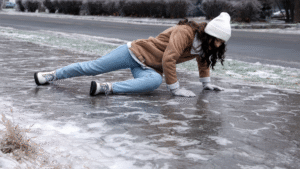
- Rain, snow, or ice tracked indoors without mitigation.
Although some hazards appear minor, they can cause serious injuries when someone slips, trips, or falls unexpectedly.
Types of Injuries Seen in Retail Accidents
Injuries sustained inside retail stores vary depending on the hazard involved, surface conditions, and how the body reacts during a fall. Hard flooring and crowded layouts often increase the risk of severe harm.
Common injuries associated with retail store accidents include:
- Broken bones involving the wrist, arm, ankle, or leg;
- Hip fractures that frequently require surgery and extended rehabilitation;
- Head injuries, including concussions or traumatic brain injuries;
- Back and spinal injuries such as herniated discs or compression fractures;
- Soft tissue injuries affecting muscles, ligaments, or tendons; and
- Knee and joint damage that may limit mobility or require surgical care.
Some injuries resolve with conservative treatment, while others result in long-term pain, reduced independence, or permanent limitations. Because symptoms can worsen over time, early medical evaluation remains critical after any retail accident.
How Washington Law Treats Liability
Washington’s premises liability law focuses on whether a retail store acted reasonably under the circumstances. Liability does not automatically exist simply because an injury occurred. Courts examine whether the retailer knew, or should have known, of a hazardous condition and failed to take appropriate action.
Important considerations often include how the hazard formed, how long it existed, and whether store employees followed reasonable inspection practices. Warning signs, cleanup procedures, and maintenance policies are also typically considered. For example, a spill left unattended for a significant period may suggest negligence, whereas a condition that appeared moments before an incident may not.
Washington follows a comparative fault system. Compensation is typically reduced if an injured person is found partially responsible. Retailers and insurers frequently argue that distractions, footwear, or visibility were the cause of the accident.
Who May Be Responsible for a Retail Injury
Responsibility for retail injuries does not always rest with a single party. Depending on the circumstances, liability may extend beyond the individual store location.
Potentially responsible parties may include store owners or operators, property owners or landlords, maintenance or janitorial companies, third-party vendors stocking merchandise, or management companies overseeing daily operations. Identifying the correct party requires careful analysis of control, contracts, and maintenance responsibilities.
Evidence That Matters After a Retail Injury
Strong premises liability claims rely on evidence demonstrating how the injury occurred and that the owner should have addressed the hazard but did not. Acting quickly helps preserve information that may otherwise be lost.
Useful evidence often includes incident reports, photographs of the hazardous condition, witness statements, surveillance footage, and medical records. Documentation connecting injuries to conditions inside the store becomes especially important when insurers dispute fault or severity.
Steps to Take After Being Injured in a Retail Store
Protecting health should remain the first priority after an accident. Prompt medical care helps identify injuries and creates essential documentation.
Additional steps often involve reporting the incident to store management, requesting a copy of any report, preserving footwear or clothing, and documenting symptoms as they develop. Limiting detailed statements to insurance representatives until injury severity is understood may also help protect legal rights.
Compensation Available in Retail Injury Claims
Injuries caused by unsafe retail conditions often create financial burdens that extend well beyond initial treatment. Washington law allows injured individuals to pursue compensation reflecting both immediate losses and long-term consequences when negligence is involved.
Compensation in retail injury claims may include:
- Medical expenses—emergency care, surgery, follow-up visits, medication, and therapy;
- Rehabilitation—physical therapy, occupational therapy, or assistive devices;
- Lost wages—time missed from work during recovery;
- Loss of earning capacity—injuries limit future employment options;
- Pain and suffering—physical discomfort and emotional distress; and
- Future medical care—ongoing treatment or long-term support needs.
Individuals injured at retail stores often underestimate the full financial impact of their injuries. A thorough evaluation helps ensure compensation reflects both current expenses and future needs.
How Brett McCandlis Brown & Conner Helps Injured Shoppers
Navigating a premises liability claim while recovering from an injury can feel overwhelming. Brett McCandlis Brown & Conner represents individuals across Washington who were harmed by unsafe retail conditions.
Our firm investigates accident circumstances, preserves evidence, coordinates medical documentation, and manages insurance negotiations. Each case receives thorough preparation, including readiness for trial in case a fair resolution is not offered. This approach helps protect clients from settlements that fail to reflect the full impact of their injuries.
Taking the Next Step After a Retail Injury
Retail injuries can disrupt daily life in unexpected ways. Understanding premises liability at retail stores helps injured individuals recognize their rights and available options.
Brett McCandlis Brown & Conner brings decades of experience advocating for injured Washington residents. Our firm remains committed to holding responsible parties accountable while helping clients pursue compensation that reflects the true cost of their injuries.
Anyone injured while shopping may benefit from speaking with a Washington premises liability attorney at Brett McCandlis Brown & Conner to gain clarity and guidance during recovery. Call us today for a free consultation.