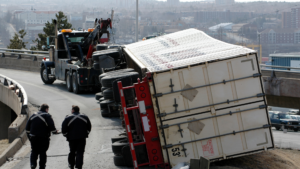
 A collision with a commercial truck can change the course of your life in an instant. Serious truck accidents often leave victims facing difficult physical recoveries and uncertainty about what comes next. If another person or company caused the crash, you should not have to deal with the aftermath alone.
A skilled Vancouver truck accident lawyer can help you protect your rights while you focus on healing.
At Brett McCandlis Brown & Conner, we know a serious truck accident can affect every part of your life. Physical injuries are only part of the struggle. Many people are suddenly faced with medical bills, time away from work, uncertainty about the future, and pressure from insurance companies looking to protect their bottom line.
Our Vancouver personal injury attorneys are committed to helping people navigate these difficult moments with straightforward guidance, responsive communication, and strong advocacy every step of the way.
What Are Common Causes of Truck Accidents in Vancouver?
Some of the most common causes of truck accidents include:
- Driver fatigue. Truck drivers often spend long hours behind the wheel, which can lead to slower reaction times, poor judgment, and reduced concentration.
- Distracted driving. Cellphones, GPS systems, dispatch communications, and other distractions inside the cab can take a driver’s attention away from the road.
- Speeding and traffic violations. Commercial trucks require more time and distance to stop safely. Speeding, tailgating, unsafe lane changes, and other traffic violations can quickly lead to serious collisions.
- Improper maintenance. Brake failures, tire blowouts, steering problems, and other mechanical issues may occur when trucking companies fail to properly inspect and maintain their vehicles.
- Improper cargo loading. Overloaded or unsecured cargo can shift during transport, increasing the risk of rollovers, jackknife accidents, and loss of vehicle control.
- Driving under the influence. Alcohol, illegal drugs, and certain medications can impair a truck driver’s reaction time, coordination, and decision-making abilities.
At Brett McCandlis Brown & Conner, we carefully investigate the cause of each truck accident to determine whether a driver, trucking company, or another party may be legally responsible for your injuries.
What Should You Do After a Truck Accident?
The moments after a truck accident can feel chaotic and overwhelming. You may be in pain, unsure of what happened, or worried about how the accident will affect your health, job, and finances. The steps you take after a crash can protect both your well-being and your potential legal claim.
Call 911 and Seek Medical Attention
Your health should always come first. Call 911 immediately so emergency responders can evaluate everyone involved and create an official accident report.
Even if your injuries seem minor, it is important to seek medical care as soon as possible. Some serious injuries, including internal injuries and traumatic brain injuries, may not show symptoms right away. Prompt medical treatment also creates documentation that may later become important evidence.
Follow Your Doctor’s Recommendations
After your initial treatment, continue attending follow-up appointments and follow your doctor’s instructions carefully. Gaps in treatment may give insurance companies an opportunity to argue that your injuries are not as serious as you claim.
Keep copies of all medical records. These documents can help show the full impact the accident has had on your life.
Report the Accident
Make sure law enforcement responds to the scene and prepares an accident report. Truck accident investigations are often more complex than ordinary car crashes, and the police report may contain important information about road conditions, witness statements, and possible traffic violations.
Request a copy of the report once it becomes available.
Gather Evidence If You Can
If you are physically able and it is safe to do so, try to collect evidence at the scene before vehicles are moved.
Helpful evidence may include photographs of:
- Vehicle damage,
- The truck and trailer,
- License plates and company markings,
- Road conditions,
- Traffic signs or signals,
- Skid marks and debris, and
- Visible injuries.
You should also obtain contact information for all parties involved in the crash and any witnesses.
Avoid Discussing Fault
Do not apologize or speculate about what caused the accident, even in casual conversations. Insurance companies may later use your statements against you.
Truck accident investigations often involve multiple parties and complicated evidence. The cause of the crash may not be immediately clear at the scene.
Be Careful When Speaking with Insurance Companies
Insurance adjusters may contact you shortly after the accident, either to request a recorded statement or to offer a quick settlement. While they may sound helpful, their goal is often to limit the company’s payments.
Avoid signing documents or accepting settlement offers before speaking with an attorney. Early settlement offers may not account for future medical treatment, lost income, or long-term complications from your injuries.
Contact a Truck Accident Lawyer as Soon as Possible
Truck accident evidence can disappear quickly. Driver logs, black box data, maintenance records, and surveillance footage may only be preserved for a limited period.
A Vancouver truck accident attorney can help protect important evidence, handle communications with insurers, and begin investigating the crash while you focus on recovery.
Early legal guidance can make a significant difference in the strength of your claim.
Who Can Be Held Liable for a Vancouver Truck Accident?
Truck accident cases are often more complicated than standard car accident claims because multiple parties may share responsibility for the crash. Determining liability requires a careful investigation into what happened and whether someone failed to operate the truck safely or follow applicable regulations.
Depending on the circumstances, liable parties may include:
- The truck driver,
- The trucking company,
- A cargo loading company,
- A maintenance provider,
- A truck manufacturer, and
- Another negligent driver.
Trucking companies and insurers often begin investigating accidents immediately after they occur. Because of this, it is important to preserve evidence quickly and thoroughly examine the facts surrounding the collision.
How Do I Prove My Truck Accident Claim?
To recover compensation after a truck accident, you generally must prove that another party acted negligently and that their actions caused your injuries.
Proving a truck accident claim often requires extensive evidence, which may include:
- Police reports,
- Black box data from the truck,
- Driver logbooks,
- Maintenance and inspection records,
- Witness statements,
- Traffic camera or surveillance footage,
- Medical records, and
- Accident reconstruction analysis.
Our attorneys know how to investigate truck accidents thoroughly and gather the evidence needed to build a strong claim. We handle the legal process while you focus on recovery.
Can You Recover Compensation After a Truck Accident?
If someone else’s negligence caused the crash, you may be entitled to compensation for both financial and personal losses related to the accident.
Depending on the facts of your case, compensation may include damages for:
- Medical expenses,
- Future medical treatment,
- Lost wages,
- Reduced earning capacity,
- Pain and suffering,
- Emotional distress,
- Property damage, and
- Rehabilitation costs.
Truck accident injuries often require extensive medical care and lengthy recovery periods. Some victims are left unable to return to their previous jobs or daily activities. Insurance companies may try to minimize these losses, especially in high-value truck accident claims.
Our attorneys work closely with medical professionals, financial experts, and other specialists when necessary to understand the full impact the accident has had on your life and future.
How Long Do I Have to Bring a Truck Accident Claim?
Washington law generally gives injured victims three years from the date of the truck accident to file a personal injury lawsuit.
Although three years may seem like a long time, it is important not to wait too long to take action. Truck accident evidence can disappear quickly, and important records may only be preserved for a limited time. Witness memories may also fade over time.
Speaking with an attorney early can help protect your rights and allow your legal team to begin investigating the accident while evidence is still available.
Why Choose Brett McCandlis Brown & Conner?
After a serious truck accident, choosing the right law firm matters. You need attorneys who understand the complexity of truck accident claims and who know how to stand up to trucking companies and insurance carriers.
At Brett McCandlis Brown & Conner, we have spent decades representing injured people throughout Washington State. Our firm is committed to helping people through some of the most difficult moments of their lives.
Clients choose our firm because we provide:
- More than 40 years of experience,
- Personalized attention throughout the case,
- Honest and straightforward guidance,
- Over $100 million recovered for our clients,
- Trial-ready representation when necessary, and
- No upfront fees or costs.
We understand that a truck accident affects far more than your vehicle. Our goal is to handle the legal burden while helping you pursue the financial recovery you need to move forward.
Speak to an Experienced Vancouver Truck Accident Attorney Today
Truck accident claims can quickly become complicated, especially when commercial trucking companies and large insurance carriers are involved.
At Brett McCandlis Brown & Conner, our attorneys are prepared to fight for you and your family. We know how to investigate truck accidents, negotiate with insurance companies, and pursue the compensation our clients need to move forward.
Contact our team today for a free consultation with an experienced Vancouver truck accident lawyer. We can review your case, explain your legal options, and help you take the next step toward recovery.
Legal References Used to Inform This Page
To ensure the accuracy and clarity of this page, we referenced official legal and other resources during the content development process: